
High Headshot Ratio
A consistently high headshot ratio of around 40% or more will most likely get you automatically banned in Deadlock.
For comparison, the top 10 aimers on Vindicta, Ivy and Wraith have a median headshot percentage of roughly 19% to 24%. And those are the outliers. The wider top 1,000 are lower than that, so anything near 40% puts you above every player on the chart.
Top 30 players by aim stats
Show the numbers
| Hero | Lowest | Median | Highest | Best game |
|---|---|---|---|---|
| Vindicta | 17.4% | 23.9% | 31.6% | 43.0% |
| Ivy | 17.8% | 18.6% | 32.4% | 44.0% |
| Wraith | 17.1% | 20.4% | 27.8% | 45.5% |
Sometimes players do get a 45% headshot ratio in a single match, especially on characters like Rem, where bullets curve to the head even when you are aiming at the chest or neck. One high game on its own is fine and it happens naturally. What gets accounts banned is keeping that number up across a lot of matches.
Deadlock's match data is public. Several websites track it and let anyone sort players by headshot percentage and other stats, so ending up near the top of one of those lists is an easy way to get your demos watched. You can opt out of that data at deadlock-api.com/data-privacy, which is the source Statlocker and most other trackers use.
Anti-Frog
TSUKI's anti-frog feature is a headshot limiter with a live tracker panel. The aimbot stops locking onto heads once you hit the cap you set, and the panel shows your hits, headshots and current rate as the match goes on.

The Other Ways Players Get Banned
- Be careful in Eternus lobbies with streamers. Some streamers talk to the developers directly and can get an account looked at.
- Going AFK with Auto Parry running against a streamer. TSUKI's Parry Safety automatically disables Auto Parry after 15 seconds if you go AFK. This feature is enabled by default.
- Forum reports. These sometimes lead to action, but they happen less often than the other two.
The simple rule is: don't have a high headshot ratio, and don't make it obvious you're cheating against streamers and Eternus players.
Low Priority Queue
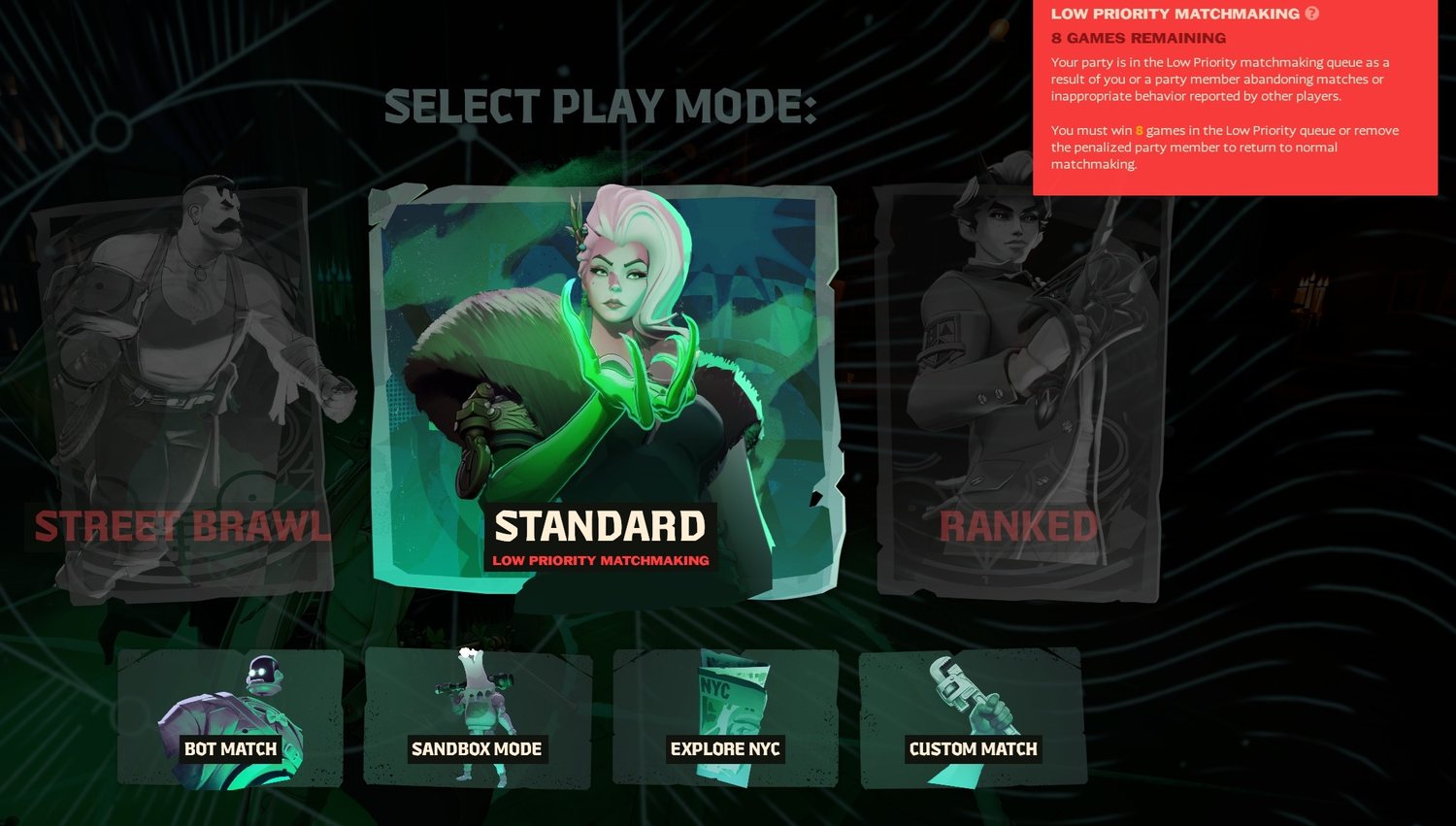
If you get reported every match, you will most likely end up in Low Priority Queue. While you are in it you cannot queue for Standard or Ranked, and you only get matched with other Low Priority players.
The only way out is winning a set number of Low Priority matches. It starts at 4 wins and doubles every time you are sent back: 8, 16, 32, 64, and even higher if you keep getting reported and sent back to Low Priority Queue.
The most common reason players end up in Low Priority is leaving matches.
Another common cause is getting reported for making it obvious that you're cheating. This can include discussing specific cheats in chat that only someone using them would know about, getting reported by multiple players for Auto Parry, repeatedly shooting at an invisible Haze, having teammates accuse you of wallhacking, or doing anything else suspicious enough to draw attention and trigger reports.
A high pSilent FOV is another easy way to attract attention. If your shots are consistently landing on players you're barely even looking at, anyone spectating you can notice it.
There Is No Traditional Anticheat
Deadlock does not currently have a traditional anticheat like VAC that actively looks for cheat software and bans you for running it. The client can see which DLLs are loaded into the game process and may report that back, so anything running internally is visible to it. Valve does not appear to be using that information for widespread automated bans.
So far, we have seen zero bans from loading TSUKI's internal DLL, and we have not seen a general cheat ban wave in Deadlock either. The game is still in early development with invite-only access, so there is no reason to treat loading the internal component as an automatic ban. If you want the internal-only features, nothing in Deadlock's enforcement history suggests you need to avoid them.
Does External vs Internal Matter for Ban Risk?
TSUKI supports both external and internal features.
By default, TSUKI runs as a read-only external. It stays outside the game and reads the information it needs through a kernel driver without loading anything into Deadlock. This type of setup is designed to be extremely difficult for traditional anticheats such as VAC to detect and can remain undetected for many years compared with cheats that inject directly into the game.
The internal component is completely optional and is only needed for certain features. If you do not need those features, you can keep using TSUKI externally.
External vs Internal
Full feature list →| Feature | External | Internal |
|---|---|---|
| Aimbot with humanization and prediction | Included | Included |
| Triggerbot and soul triggerbot | Included | Included |
| Player, world, and ability ESP | Included | Included |
| 2D radar and Cloud Radar | Included | Included |
| Auto parry (melee, counterspell, viscous) | Included | Included |
| Lua scripting and the script library | Included | Included |
| Visibility check | Raycast | Raycast or engine |
| Aim mode | Mouse | Mouse, pSilent, hybrid |
| pSilent / Silent Aim | Not included | Included |
| Backtrack | Not included | Included |
| Player / Entity Glow | Not included | Included |
| World modulation | Not included | Included |
| Region changer | Not included | Included |
Streamproof
If you are recording or streaming and do not want the menu or ESP to appear in the capture, open the TSUKI menu and enable Exclude From Capture.
With this enabled, everything will remain visible on your screen while being excluded from supported screen captures and streaming software.
Keep in mind that some internal features, such as Minimap Unlock and Player Glow, are not streamproof and may still appear in your recording or stream, so you may want to disable them beforehand.
Final Notes
Most Deadlock bans we have seen are tied to abnormally high headshot ratios. Reports and manual review can also lead to bans in some cases, but they appear to be much less common.
The most common issue you are likely to run into is Low Priority Queue from being reported too often. As long as you avoid making it obvious that you're cheating, use reasonable settings, and don't repeatedly give other players a reason to report you, this is usually easy to avoid.
Deadlock is still actively being developed, so its enforcement methods can change over time. This page will be updated if we see meaningful changes to how bans, reports, or Low Priority Queue are handled.
Last updated 19 Sep 2026.